News

A simple question leads to a profound answer for the public

Kimberly McKeirnan didn’t set out to battle a pandemic.

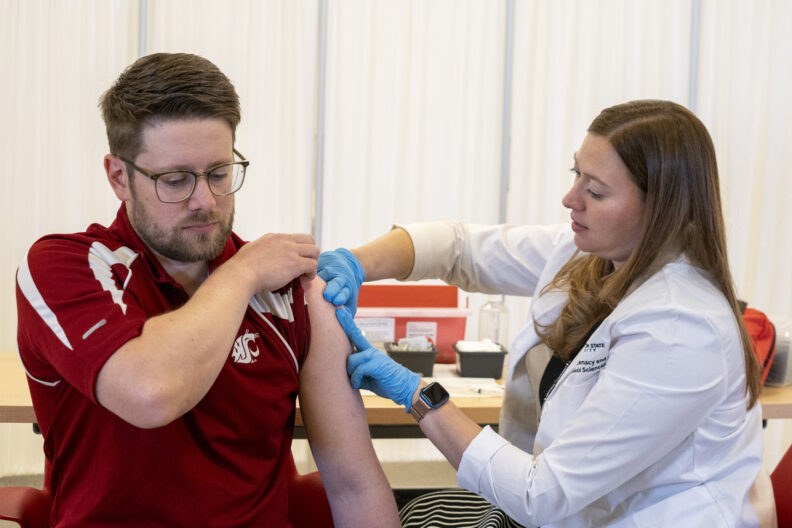
She began with a simple question: Why not employ pharmacy technicians to give vaccinations, to help overworked pharmacists and improve patient care?

Other medical assistants give injections, after all. Parents give shots to their diabetic children, and many people give themselves shots. Also, around the time this possibility was germinating in her mind, she learned that Idaho was considering making it legal for pharmacy techs to give vaccines.

She responded by creating a training program in 2016 that has since been used by some 170,000 pharmacy techs, resulting in millions and millions of vaccinations while bringing more than $10 million in royalties to Washington State University — the second-most of any commercialized innovation at the university. The program gained steam during the pandemic, adding a crucial new tool just as the need for rapid, large-scale vaccinations became paramount.

The project, funded in part by NASA, brought together researchers across WSU from pharmaceutical sciences, engineering and sleep science.

WSU lab’s work makes nuclear industry safer 

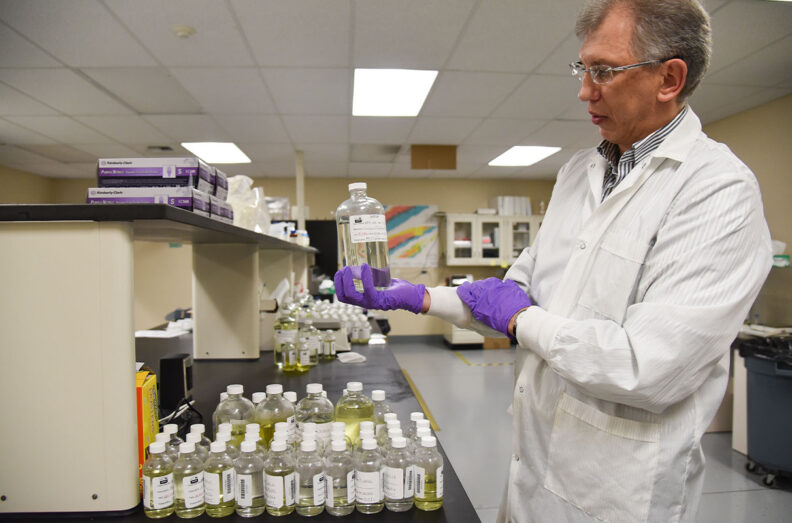
The U.S. Transuranium and Uranium Registries is a little-known research program in the Washington State University College of Pharmacy and Pharmaceutical Sciences, but it has an outsized role in scientists’ understanding of how radioactive elements affect the human body.

USTUR’s findings are used to validate radiation safety standards for people who work with plutonium and uranium, to study the biological effects of radiation on tissues, and to improve mathematical models that are used to calculate radiation doses.

One of its most important tools is the National Human Radiobiology Tissue Repository, an archive of tissue, organs, and bones from 371 people who were exposed to radioactive elements during their working lives and who volunteered to donate their organs or their bodies to the USTUR after their deaths.

Sergey Tolmachev dressed in a lab coat and gloves holds a bottle of liquid in the United States Transuranium and Uranium Registry.

June 2026 Updates

The Faculty and Student Scholarship section is provided as a service to the WSU College of Pharmacy and Pharmaceutical Sciences community for sharing publications, presentations, and other highly transactional types […]

From AI to Rural Health: Pharmacy and Pharmaceutical Sciences Graduates Prepare to Shape the Future of Care

This spring, College of Pharmacy and Pharmaceutical Sciences graduated 45 Doctor of Pharmacy, two Bachelor of Science in Pharmaceutical and Medical Sciences, and three Doctor of Philosophy (PhD) in Pharmaceutical and Molecular Medicine degrees. Doctor of Pharmacy (PharmD) candidates are anticipated to work as pharmacists in health care across hospitals, clinics and pharmacies across Washington state and the country, while PhD candidates typically go on to work in pharmaceutical companies researching and developing new drugs and therapies.  

April 2026 Updates

The Faculty and Student Scholarship section is provided as a service to the WSU College of Pharmacy and Pharmaceutical Sciences community for sharing publications, presentations, and other highly transactional types […]

Class of 2026 achieves 90% residency match rate in Phase I

Phase 1 of ASHP residency matches were released in mid-March and the results for the class of 2026 currently stand at a 90% match rate. 19 out of the 21 fourth-year pharmacy students who participated in the ASHP match placed. The overall Phase 1 match rate places WSU in the #1 spot of all pharmacy schools in the Pacific Northwest and the West Coast.

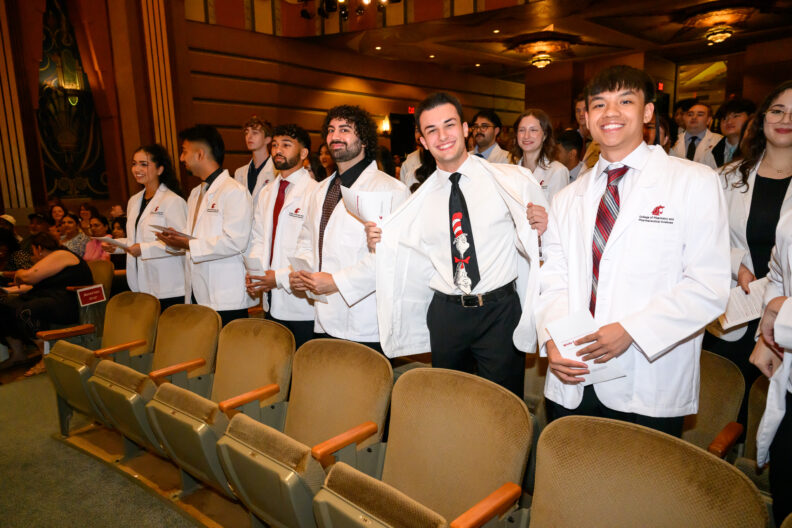
Class of 2026 group photo in their white coats.