John Lynch grew up in Spokane’s South Hill, a neighborhood known for its lush parks, tree-lined streets, and opportunities for outdoor adventure. As a child, he embraced the beauty of his surroundings—sledding through snow-covered hills in winter, splashing in nearby pools during the summer, and biking in the crisp fall air. His early years were filled with laughter, exploration, and the carefree spirit that defines childhood.
However, at the age of 11, everything changed. John began to experience symptoms of juvenile idiopathic arthritis (JIA), a chronic disease that would follow him for the rest of his life. His days of carefree play slowly gave way to doctor’s visits, medications, and the reality of living with this debilitating illness which affects roughly 300,000 children in the United States. But instead of allowing the disease to define his life, John made a decision that would change the future for countless children struggling with the same condition.
In 2004, John founded the Rheumatoid Arthritis Project with a singular vision: to find a cure for rheumatoid arthritis and juvenile idiopathic arthritis (JIA), ensuring that future generations wouldn’t have to endure the same hardships. His foundation became his life’s work, and his dedication soon connected him with a remarkable network of researchers at Washington State University (WSU) who shared his same vision for finding a cure for rheumatoid arthritis.
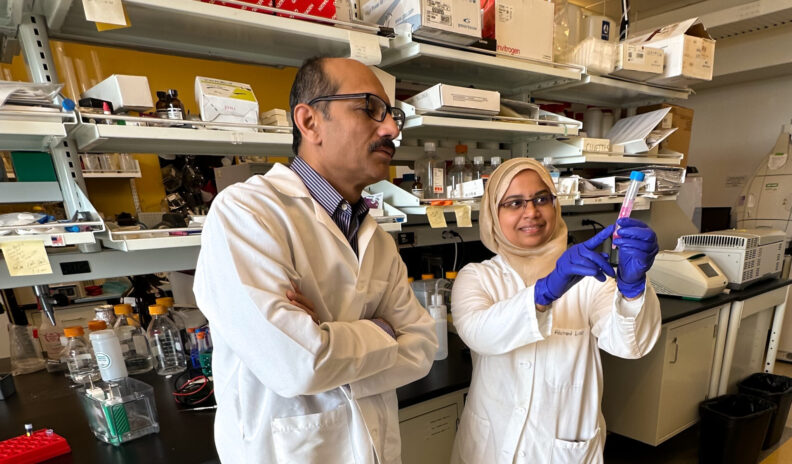
This is where Ruby Siegel enters the story. A bright and ambitious PhD student at WSU, Ruby had been studying rheumatoid arthritis under the guidance of her mentor, Dr. Salah Ahmed, who had built a reputable lab specializing in the disease. While Ahmed’s lab had made significant strides in understanding rheumatoid arthritis, juvenile idiopathic arthritis remained unexplored due to a lack of funding. But Ruby saw an opportunity. She connected John Lynch with Dr. Ahmed, and together they began to explore the possibility of advancing research into JIA.
It wasn’t long before another critical player joined the team: Meena Shanta, a dedicated researcher who had been personally touched by arthritis. Watching her mother’s battle with rheumatoid arthritis had driven Meena to dedicate her career to finding a cure, and the opportunity to work on JIA was a perfect match for her passion. Together, Meena, Ruby, and Ahmed crafted a research proposal to study the inflammation that causes JIA and explore potential treatments.
In 2022, the Rheumatoid Arthritis Project, led by John Lynch, committed $35,000 to fund the lab’s initial research into JIA. While the amount may have seemed modest, it was a critical first step in a journey that would soon involve a nationwide clinical network. Thanks to these starter funds, Meena and Dr. Ahmed established partnerships with leading institutions such as the University of Washington, Boston Children’s Hospital, and the University of Michigan. Through these partnerships, they were able to collect synovial and blood samples to study the causes of inflammation in children with JIA, advancing their understanding of the disease.
“To my knowledge, our lab is the only basic research lab in the state of Washington working on understanding the cellular and molecular mechanisms that cause this disease in kids and concurrently identifying and testing new targets to develop a novel treatment for JIA,” said Ahmed, Pharmaceutical Sciences Professor and Associate Dean for Research and Graduate Education.
The research took a major leap forward when the team identified a promising approach to treatment: focus targeting activated synovial fibroblasts, which are responsible for the inflammation and joint destruction in JIA. Unlike current therapies, which suppress the immune system and lead to serious side effects, this new approach could suppress inflammation without compromising the body’s defenses. It was a breakthrough that could potentially bring hope to the families of children with JIA, and it would not have been possible without the support of John Lynch’s foundation.
Today, Meena is in the fourth year of her PhD program, determined to see her research through. Her goal is to successfully use preclinical models to test new therapies for JIA, bringing the team one step closer to finding a cure. In parallel, the lab is working to secure a $425,000 grant from the National Institutes of Health (NIH) to expand their research, a critical milestone that could bring about transformative change in how JIA is treated. The research progress in the initial years of work by the team motivated the Rheumatoid Arthritis Project to give another round of funding support worth $36,000.
But none of this would have been possible without the initial support and vision of the Rheumatoid Arthritis Project and the dedication of researchers like Meena, Ruby, and Dr. Ahmed, who have laid the groundwork for a future where children with JIA can live free of pain and limitation.
Every donation—no matter the size—has the power to create real, lasting change. John Lynch’s gift of $71,000 has already set in motion research that could alter the lives of millions of children for years to come.
For more information about research or giving to the WSU College of Pharmacy and Pharmaceutical Sciences, please contact Director of Development Kelly Sylvester, Kelly.Sylvester@wsu.edu; 509-368-6675.