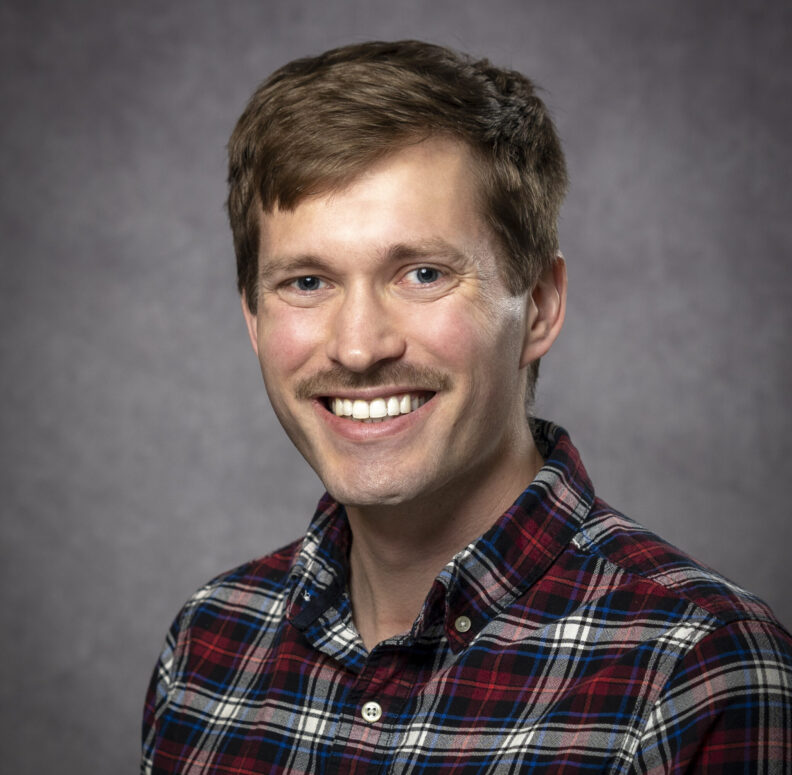
- Assistant Professor, Pharmaceutical Sciences
Biography
Education
- PhD in biomedical sciences, University of Missouri, Columbia, Missouri
- Bachelor of Science in biology, Pacific Lutheran University, Parkland, Washington
Additional training
- Postdoctoral fellowship in behavioral neuroscience, Oregon Health & Science University, Portland, Oregon
Research
Physical activity (PA) is a cornerstone of human health and well-being; however, its implementation as a viable treatment and preventative option for alcohol use disorders (AUDs) remains understudied. This is underscored at the social level by the ~26% of adult U.S. citizens that report binge drinking and the mere 3% of citizens who manage to meet daily U.S. PA guidelines. Population-based studies further indicate a positive relationship between PA levels and alcohol intake across moderate drinkers, while non-drinkers and heavy drinkers tend to be less physically active. This suggests PA may help promote moderate alcohol intake and offer a path to harm reduction. The goal of my research program is to identify the neurobiological and behavioral relationship between PA and excessive ethanol intake using behavioral, whole brain, and circuit-driven approaches to help guide PA as a viable treatment option for AUDs.
Both PA and alcohol use create neural remodeling across interconnected brain regions belonging to the mesocorticolimbic system. This neural network comprises of interoceptive brain regions – those responsible for the processing and translating the internal body state [such as the insula cortex (IC)] – as well as aversion-related brain regions and regions important for reinforcement. The primary goal of my current research is to identify the overlap in circuits engaged in voluntary PA and excessive alcohol intake through investigating 1) the ability of PA to reduce chronic harmful ethanol drinking in a genetic risk model for harmful drinking, the High Drinking in the Dark (HDID) mouse lines, 2) neural circuits critical for the reinforcing effects of PA and binge-like ethanol drinking using whole brain imaging, and 3) the role of the insula cortex to nucleus accumbens projection – a key circuit in the interoceptive effects of ethanol – as a potential mechanism through which PA may act as a non-invasive treatment option for AUDs.
Publications
Grigsby K, Palacios J, Chan AE, Spencer SM, Ozburn AR. Effects of metformin on binge‐like ethanol drinking and adenosine monophosphate kinase signaling in inbred high drinking in the dark line 1 mice.
Alcohol: Clinical and Experimental Research. 2024 Dec.
Grigsby K, Usmani Z, Anderson J, Ozburn AR. Development and Implementation of a Dependable, Simple, and Costeffective (DSC), Open-source Running Wheel in High Drinking in the Dark and Heterogeneous Stock/Northport mice.
Frontiers in Behavioral Neuroscience. 2024 Jan 15; 17:1321349.
Grigsby KG*, Mangieri R*, Roberts AJ, Lopez M, Tran A, Firsick E, Townsley K, Benze A, Bess J, Eisenstein T, Meissler J, Light J, Miller J, Quello S, Shadan F, Skinner M, Aziz H, Metten P, Morissett RA, Becker H, Crabbe JC, Mason B, Ozburn A. Preclinical and clinical evidence for suppression of alcohol intake by apremilast
J Clin Invest. 2023 Mar 15. 133(6):e159103. doi: 10.1172/JCI159103. PMID: 36656645
*Annotation: Initially published as bioRxiv 2021.05.13.444033; doi: https://doi.org/10.1101/2021.05.13.444033.
Grigsby KB, Kerr NR, Kelty TJ, Mao X, Childs TE, Booth FW. Acute wheel-running increases markers of stress and aversion-related signaling in the basolateral amygdala of male rats. Journal of Functional Morphology and Kinesiology. 2022 Dec 30;8(1):6. doi: 103390/jfmk8010006. PMID: 36648898
*Annotation: This was an invited submission for the special issue “Motivational Factors Influencing Performance in Sport and Exercise”
Grigsby KB*, Ledford C*, Batish T, Kanadibhotla S, Smith D, Firsick E, Tran A, Townsley K, Reyes K, LeBlanc K, Ozburn AR. Targeting the Maladaptive Effects of Binge Drinking on Circadian Gene Expression
Int. J. Mol. Sci. 2022 Sep 21. 23, 11084. https://doi.org/10.3390/ijms231911084. PMID: 36232380.
Savarese AM, Grigsby KB, Jensen BE, Borrego MB, Finn DA, Crabbe JC, Ozburn AR.
Corticosterone Levels and Glucocorticoid Receptor Gene Expression in High Drinking in the Dark Mice and Their Heterogeneous Stock (HS/NPT) Founder Line.
Front Behav Neurosci. 2022 May 12;16:821859. doi: 10.3389/fnbeh.2022.821859. PMID: 35645743
Borrego MB*, Grigsby KB*, Townsley KG, Chan A, Firsick EJ, Tran A, Savarese A, Ozburn AR.
Central nucleus of the amygdala projections onto the nucleus accumbens core regulate binge-like alcohol drinking in a CRF-dependent manner.
Neuropharmacology. 2022 Feb 1;203:108874. doi: 10.1016/j.neuropharm.2021.108874. PMID: 34748860
Jensen BE, Townsley KG, Grigsby KB, Metten P, Chand M, Uzoekwe M, Tran A, Firsick E, LeBlanc K, Crabbe JC, Ozburn AR. Ethanol-Related Behaviors in Mouse Lines Selectively Bred for Drinking to Intoxication.
Brain Sciences. (2021) 11(2):189. doi: 10.3390/brainsci11020189. PMID: 33557285
*Annotation: This was an invited submission to a special collection.
Grigsby KB*, Savarese AM*, Metten P, Mason BJ, Blednov YA, Crabbe JC, Ozburn AR. Effects of tacrolimus and related immune targeting compounds on binge-like ethanol drinking in high drinking in the dark (HDID-1) mice.
Neuroscience Insights. (2020) 15:2633105520975412. doi: 10.1177/2633105520975412. PMID: 33294845
*Annotation: This was an invited submission to a special collection.
Grigsby KB, Childs TE, & Booth FW. The role of nucleus accumbens CREB attenuation in rescuing low voluntary running behavior in female rats.
Journal of Neuroscience Research. 2020 Nov;98(11):2302-16. doi: 10.1002/jnr.24698. PMID: 32725625
Grigsby KB, Kovarik CM, Mao X, Booth FW. Medial preoptic estrogen receptor-beta blunts the estrogen receptor-alpha mediated increases in wheel-running behavior of female rats.
Behavioural brain research. 2020 Feb 3;379:112341. doi: 10.1016/j.bbr.2019.112341. PMID: 31711895
Grigsby KB, Kelty TJ, Booth FW. Medial Habenula Maturational Deficits Associate with Low Motivation for Voluntary Physical Activity.
Brain Research. 2018 Nov 1;1698:187-94. doi: 10.1016/j.brainres.2018.08.016. PMID: 30118717
Grigsby KB, Ruegsegger GN, Childs TE, Booth FW. Overexpression of Protein Kinase Inhibitor Alpha Reverses Rat Low Voluntary Running Behavior.
Molecular neurobiology. 2018 Jun 21:1-6. doi: 10.1007/s12035-018-1322-3. PMID: 30218401
Grigsby KB, Kovarik CM, Rottinghaus GE, Booth FW. High and low nightly running behavior associates with nucleus accumbens N-Methyl-d-aspartate receptor (NMDAR) NR1 subunit expression and NMDAR functional differences.
Neuroscience letters. 2018 Apr 3;671:50-5. doi: 10.1016/j.neurolet.2018.02.011. PMID: 29425730
Ruegsegger GN, Grigsby KB, Kelty TJ, Zidon TM, Childs TE, Vieira-Potter VJ, Klinkebiel DL, Matheny M, Scarpace PJ, Booth FW. Maternal Western diet age-specifically alters female offspring voluntary physical activity and dopamine-and leptin-related gene expression.
The FASEB Journal. 2017 Aug 9:fj-201700389R. doi: 10/1096/fj.201700389R. PMID: 28794174
Ruegsegger GN, Sevage JA, Childs TE, Grigsby KB, Booth FW. 5‐Aminoimidazole‐4‐carboxamide ribonucleotide prevents fat gain following the cessation of voluntary physical activity.
Experimental Physiology. 2017 Nov 1; 102(11):1474-85. doi: 10.113/EP086335. PMID: 28786140
Ruegsegger GN, Toedebusch RG, Childs TE, Grigsby KB, Booth FW. Loss of Cdk5 function in the nucleus accumbens decreases wheel running and may mediate age‐related declines in voluntary physical activity.
The Journal of physiology. 2017 Jan 1;595(1):363-84. doi: 10.1113/JP272489. PMID: 27461471